If you’ve been exploring healthy eating options, you’ve probably come across both microgreens and sprouts — and wondered if they’re the same thing. They look somewhat similar, but they’re actually quite different in how they’re grown, what they contain, and how they’re best used.
In this blog, we’ll break down the key differences so you can make an informed choice — and if you’re in Rajkot, we’ll also show you where to get the freshest microgreens.
What Are Sprouts?
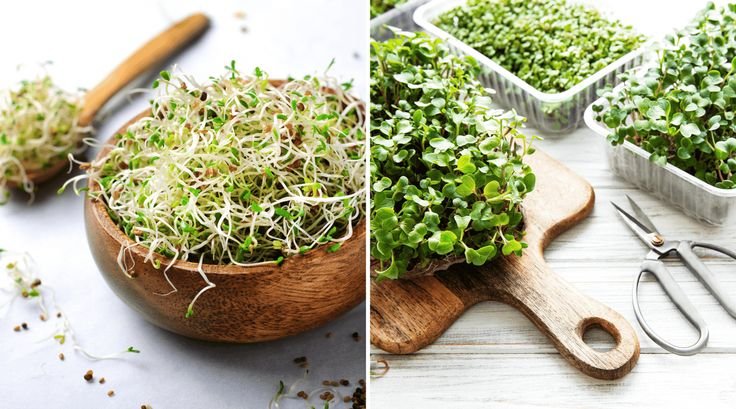
Sprouts are seeds that have just begun to germinate — usually harvested within 2 to 5 days, before any leaves form. They’re grown in water (no soil needed) and consist mainly of the seed, root, and a tiny stem.
Common examples: moong sprouts, chana sprouts, alfalfa sprouts.
What Are Microgreens?
Microgreens are harvested later — typically 7 to 21 days after germination — once the first set of true leaves has developed. They’re grown in soil or a growing medium, under light, and are harvested with scissors just above the soil line.
Common examples: radish microgreens, broccoli microgreens, mustard microgreens, pak choi microgreens.
Key Differences at a Glance
| Feature | Sprouts | Microgreens |
|---|---|---|
| Growing Time | 2–5 days | 7–21 days |
| Growing Medium | Water only | Soil/growing medium + light |
| Harvested Part | Seed + root + tiny stem | Stem + first leaves |
| Texture | Soft, crunchy | Crisp, tender |
| Flavor | Mild | Stronger, more defined |
| Nutrient Density | Good | Often significantly higher |
| Food Safety Risk | Higher (warm, moist growing conditions can favor bacteria) | Lower (grown in light, more controlled conditions) |
| Shelf Life | Shorter | Comparatively longer |
Which One Is Healthier?
Both offer health benefits, but microgreens generally have an edge for a few reasons:
- Higher nutrient concentration – Because microgreens photosynthesize and develop true leaves, many varieties build up higher levels of vitamins, minerals, and antioxidants compared to sprouts.
- Lower contamination risk – Sprouts are grown in warm, humid conditions without soil, which can sometimes create an environment where bacteria grow more easily. Microgreens, grown in soil with airflow and light, generally carry a lower risk.
- Better flavor variety – Microgreens come in a much wider range of tastes — peppery radish, tangy mustard, sweet pea shoots — making them more versatile in cooking.
That said, sprouts still have their place — they’re quick to grow at home and are a good source of plant protein (especially moong and chana sprouts).
Which Should You Choose?
- Choose sprouts if: You want something quick to grow at home, budget-friendly, and protein-focused.
- Choose microgreens if: You want higher nutrient density, better flavor, longer shelf life, and a premium touch for salads, garnishing, or fine dining.
For most health-conscious households today, microgreens are becoming the preferred choice — especially when sourced fresh and grown locally.
Where to Get Fresh Microgreens in Rajkot
If you’ve decided microgreens are the way to go, freshness is everything. That’s where HnG Organics comes in.
We grow our microgreens locally in Rajkot using a grow-to-order, indoor controlled farming method — meaning your microgreens are harvested only after you place your order, not pulled from old stock.
Our available varieties include:
- White Radish Microgreens
- Pink Radish Microgreens
- Rose Radish Microgreens
- Sango Radish Microgreens
- Broccoli Microgreens
- Mustard Microgreens
- Pak Choi Microgreens
✅ Indoor Controlled Farming
✅ Grow-to-Order Freshness
✅ Home Delivery Across Rajkot
✅ Bulk Supply for Restaurants & Cafés
Frequently Asked Questions
Q: Are microgreens just baby sprouts?
No. While both come from seeds, microgreens are grown in soil and harvested later, after developing true leaves — giving them a different texture, flavor, and nutrient profile than sprouts.
Q: Are sprouts unsafe to eat?
Not necessarily, but because they’re grown in warm, moist conditions without soil, proper hygiene and sourcing matter a lot. Always buy from a trusted, clean source.
Q: Can I replace sprouts with microgreens in my diet?
Yes, many people use microgreens as a fresher, more nutrient-dense alternative to sprouts in salads, sandwiches, and smoothies.
Q: Where can I buy fresh microgreens in Rajkot?
You can order directly from HnG Organics — we grow fresh, indoor, grow-to-order microgreens with home delivery across Rajkot.
Final Thoughts
While sprouts and microgreens may look similar at a glance, they’re quite different in how they’re grown and what they offer nutritionally. If you’re looking to add more variety, flavor, and nutrient density to your meals, fresh microgreens are a smart choice — especially when sourced locally.
📍 Order fresh, grow-to-order microgreens in Rajkot today from HnG Organics.